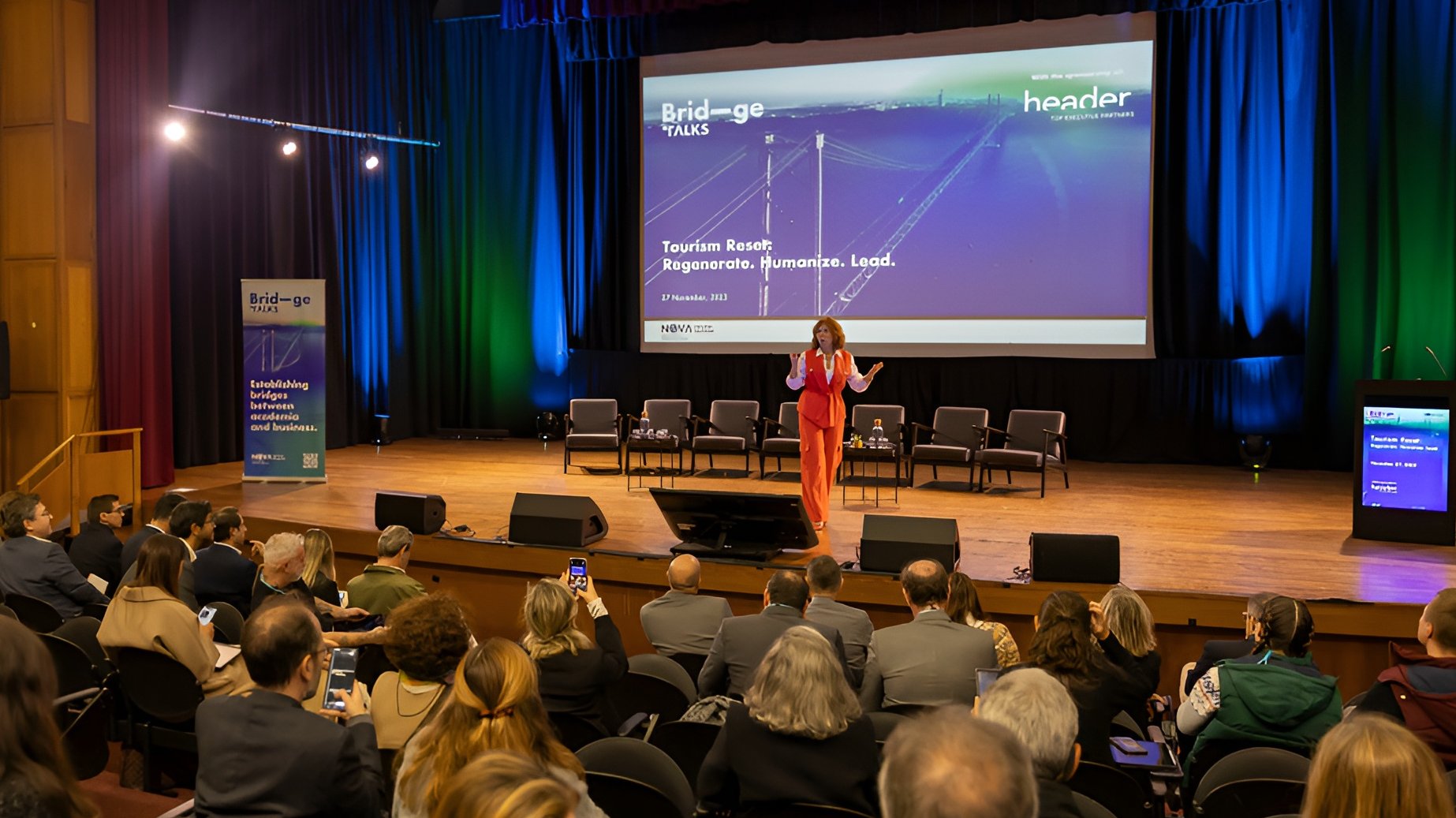
Bridge Talks puts technology, AI and justice at the center of debate in Lisbon

NOVA FCT Executive Education is organising a new edition of Bridge Talks focused on the intersection of technology, artificial intelligence and law, with a programme designed to explore how innovation, ethics and human decision-making must evolve together. The event takes place on 22 April 2026, from 14:00, at the Palácio de Queluz, in Lisbon.
Under the theme Technology, AI and Law: Innovate with ethics, decide with responsibility, the conference will bring together legal experts, researchers, policymakers and technology leaders for an afternoon of talks and discussions on one of the most important transitions now reshaping institutions and society.
According to the official program, the event will examine the impact of technology and artificial intelligence on law, with particular attention to the tensions between innovation, ethics, responsibility and human decision-making.
The event is part of the Bridge Talks series, promoted by NOVA FCT Executive Education, which describes the initiative as a platform designed to foster meaningful links between academia and business, explore transformative ideas and build bridges for a more sustainable and prosperous future.
The conference opens with institutional welcome remarks from Gonçalo Matias, Minister Adjunct and for State Reform, and Rita Alarcão Júdice, Minister of Justice, setting the tone for a conversation that connects public policy, justice, technology and society.
The first session, Deciding with responsibility: the bridge between Science, Technology and Law, brings together João Massano, President of the Portuguese Bar Association, and José Júlio Alferes, Director of NOVA FCT, around a central question: whether the next major reform of justice may be less about a new legal code and more about a new way of deciding.
A second session, Law and AI today: new rules, new responsibilities, is framed as an interdisciplinary dialogue between law and engineering, focusing on current challenges in AI regulation, supervision, regulatory sandboxes and responsible development.
The panel is moderated by Cláudia Lima Costa and includes Cabanas Alves, Graça Canto Moniz, Miriam Santos, Raquel Brízida Castro and Vasco Rosa Dias. The official description also notes that the discussion will address the impact of AI systems on vulnerable groups, including minors.
The third main conversation, Justice in evolution and innovation with impact, shifts the focus toward concrete examples of how innovation can strengthen efficiency, trust, proximity and access to justice without compromising fundamental principles. Moderated by David Silva Ramalho, the roundtable includes Cláudia Pina, José Luís Lopes da Mota, Marisa Monteiro Boorsboom, Paulo Correia and Vasco Silveira.
One of the differentiating elements of this edition is an immersive closing moment titled Echoes of the Past, Signs of the Future. Hosted within the setting of the Palácio Nacional de Queluz, the experience is designed to connect heritage and future-oriented reflection, inviting participants to think critically about how humans, data and machines increasingly share the same decision space.
The organisers position the event as an opportunity to reflect on how the future of justice is being built through technology, artificial intelligence and human judgment, with ethics, responsibility and real-world impact at the core.
Registration is open through the official event page.
According to the official program, the event will examine the impact of technology and artificial intelligence on law, with particular attention to the tensions between innovation, ethics, responsibility and human decision-making.
The event is part of the Bridge Talks series, promoted by NOVA FCT Executive Education, which describes the initiative as a platform designed to foster meaningful links between academia and business, explore transformative ideas and build bridges for a more sustainable and prosperous future.
The conference opens with institutional welcome remarks from Gonçalo Matias, Minister Adjunct and for State Reform, and Rita Alarcão Júdice, Minister of Justice, setting the tone for a conversation that connects public policy, justice, technology and society.
The first session, Deciding with responsibility: the bridge between Science, Technology and Law, brings together João Massano, President of the Portuguese Bar Association, and José Júlio Alferes, Director of NOVA FCT, around a central question: whether the next major reform of justice may be less about a new legal code and more about a new way of deciding.
A second session, Law and AI today: new rules, new responsibilities, is framed as an interdisciplinary dialogue between law and engineering, focusing on current challenges in AI regulation, supervision, regulatory sandboxes and responsible development.
The panel is moderated by Cláudia Lima Costa and includes Cabanas Alves, Graça Canto Moniz, Miriam Santos, Raquel Brízida Castro and Vasco Rosa Dias. The official description also notes that the discussion will address the impact of AI systems on vulnerable groups, including minors.
The third main conversation, Justice in evolution and innovation with impact, shifts the focus toward concrete examples of how innovation can strengthen efficiency, trust, proximity and access to justice without compromising fundamental principles. Moderated by David Silva Ramalho, the roundtable includes Cláudia Pina, José Luís Lopes da Mota, Marisa Monteiro Boorsboom, Paulo Correia and Vasco Silveira.
One of the differentiating elements of this edition is an immersive closing moment titled Echoes of the Past, Signs of the Future. Hosted within the setting of the Palácio Nacional de Queluz, the experience is designed to connect heritage and future-oriented reflection, inviting participants to think critically about how humans, data and machines increasingly share the same decision space.
The organisers position the event as an opportunity to reflect on how the future of justice is being built through technology, artificial intelligence and human judgment, with ethics, responsibility and real-world impact at the core.
Registration is open through the official event page.


 Don’t start a business unless it’s an obsession and something you love. If you have an exit strategy, it’s not an obsession
Mark Cuban
American Businessman
American Businessman
Next Events
- © 2026 MyBusiness.com
- Privacy Policy
- Terms of Use
Powered By