
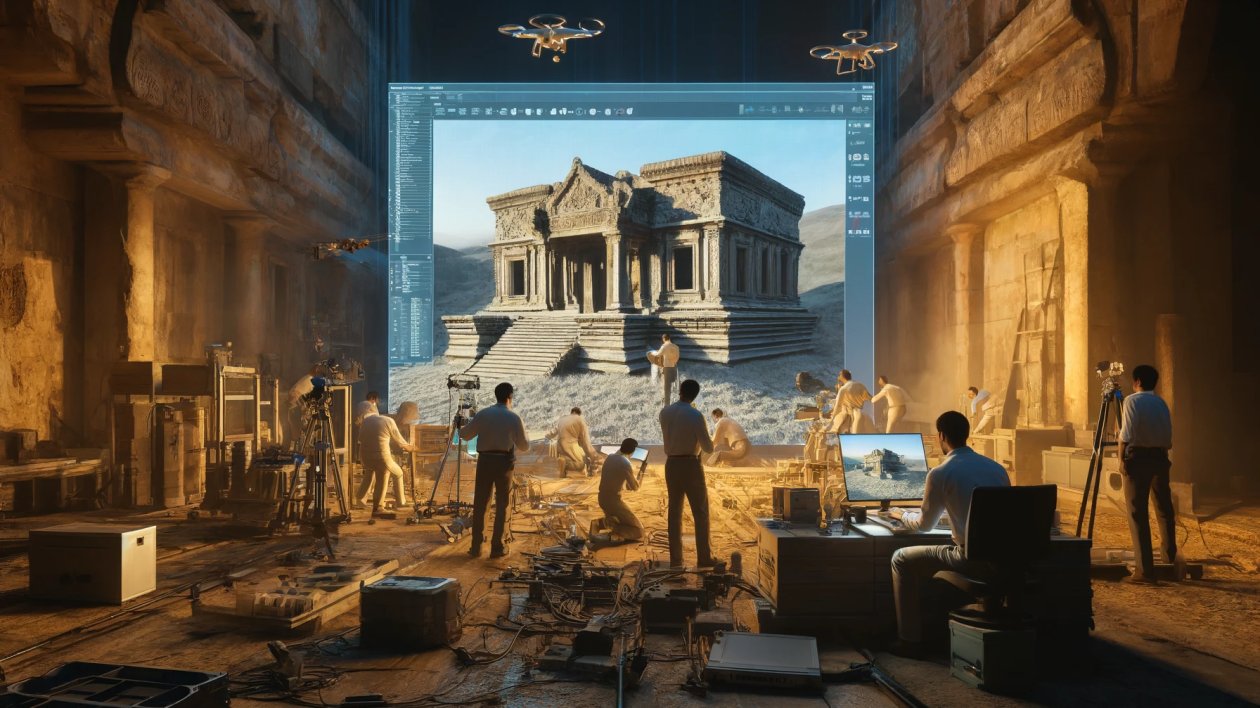
Heritage Under Pressure: Preserving Memory in a VUCA World at War
As war, geopolitical fragmentation and systemic instability reshape the global landscape, cultural heritage is becoming increasingly vulnerable to destruction, politicization and displacement. In this context, preservation must be redefined not as a static act of protection, but as an adaptive and strategic response to a more volatile world.
There is a persistent assumption in the way heritage is often understood: that it is stable, protected and somehow insulated from the turbulence of the present. Yet heritage has never been immune to disruption. It is vulnerable not only to physical decay, but also to political instability, economic pressure, institutional weakness and symbolic conflict.
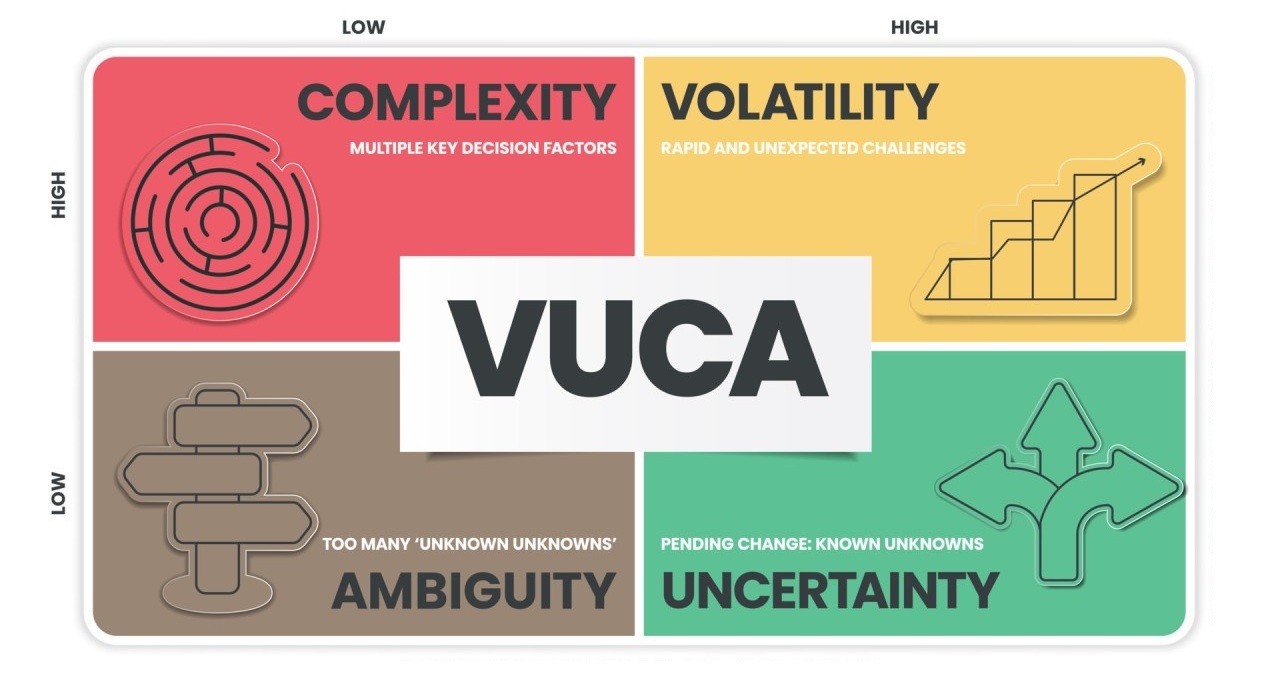
In today’s world, shaped by volatility, uncertainty, complexity and ambiguity (VUCA), that vulnerability has become more visible and more consequential.
The return of large-scale war, from the Russian invasion of Ukraine to continued tensions across the Middle East, has exposed just how fragile cultural heritage can be when geopolitical systems come under strain. Museums are forced to evacuate collections, archaeological sites face destruction, monuments become targets or collateral damage, and historical narratives are contested or deliberately rewritten. What is at stake is not only the preservation of objects or places, but the continuity of identity, collective memory and cultural legitimacy.
Volatility is expressed in the sudden destruction of sites that took centuries to build. Uncertainty emerges when institutions are no longer able to plan, protect or even remain operational. Complexity grows as legal protections and international conventions struggle to hold in fragmented political environments. Ambiguity persists in the questions that follow conflict: who owns heritage, who speaks for it, and which version of history is allowed to endure?
The traditional preservation model was not designed for such a context. It was built around assumptions of relative stability, institutional continuity and a clearer separation between cultural stewardship and geopolitical crisis. Those assumptions are no longer sufficient.
Today, heritage professionals increasingly operate in conditions that resemble crisis management more than conventional conservation. Decisions must often be made quickly, with incomplete information and within shifting legal, political or security realities. Preservation is no longer simply a technical or curatorial function. It is becoming adaptive, strategic and, in many cases, deeply political.
Digital technologies have emerged as an important part of that response. Tools such as 3D scanning, digital archiving and virtual reconstruction have created new ways to document and preserve cultural assets before they are damaged or lost. In conflict-affected environments, such technologies can provide continuity where physical preservation is no longer possible. They offer a form of resilience, and in some cases, a bridge between loss and future recovery.
But digital preservation also introduces new questions that should not be underestimated.
A digital replica may preserve form, but it does not fully replace material authenticity, social context or lived connection. It also raises governance issues: who owns the digital record, where it is stored, who controls access, and whether the communities most connected to that heritage remain central to the preservation process. There is a clear risk that heritage becomes digitally documented while culturally displaced.
This is why preservation in a VUCA world cannot be approached as a neutral or purely technical endeavour. It requires diplomatic coordination, institutional flexibility and collaboration across disciplines and sectors. It also requires a conceptual shift: from preservation as static protection to preservation as adaptive continuity.
That shift becomes even more urgent when heritage is deliberately weaponized.
The destruction of cultural heritage has long accompanied war, but its strategic use has become more explicit. Sites, monuments and symbols are attacked not only for what they are, but for what they represent. In such cases, the objective is not merely destruction. It is the dismantling of identity, the erasure of memory and the imposition of dominance through symbolic means.
In that context, preserving heritage becomes more than conservation. It becomes an act of resilience.
Yet even under these conditions, there is also room for renewal. Periods of instability often force institutions to rethink established models, adopt interdisciplinary approaches and involve communities more directly. They challenge centralized assumptions and create space for more distributed, participatory and technologically enabled forms of preservation.
This may be one of the defining responsibilities of our time.
The central question is no longer whether heritage can be preserved according to the frameworks of the past. It is whether preservation itself can be redefined to meet the demands of a far more unstable present.
Because heritage is not only a record of what came before. It is also a foundation for how societies understand themselves, navigate uncertainty and imagine the future. In times of conflict and fragmentation, that role becomes more, not less, important.
To lose heritage is not simply to lose history. It is to weaken part of our collective ability to understand who we are, what binds us together and what futures remain possible.
In today’s world, shaped by volatility, uncertainty, complexity and ambiguity (VUCA), that vulnerability has become more visible and more consequential.

The return of large-scale war, from the Russian invasion of Ukraine to continued tensions across the Middle East, has exposed just how fragile cultural heritage can be when geopolitical systems come under strain. Museums are forced to evacuate collections, archaeological sites face destruction, monuments become targets or collateral damage, and historical narratives are contested or deliberately rewritten. What is at stake is not only the preservation of objects or places, but the continuity of identity, collective memory and cultural legitimacy.
- War intensifies what the VUCA condition already places under pressure
Volatility is expressed in the sudden destruction of sites that took centuries to build. Uncertainty emerges when institutions are no longer able to plan, protect or even remain operational. Complexity grows as legal protections and international conventions struggle to hold in fragmented political environments. Ambiguity persists in the questions that follow conflict: who owns heritage, who speaks for it, and which version of history is allowed to endure?
The traditional preservation model was not designed for such a context. It was built around assumptions of relative stability, institutional continuity and a clearer separation between cultural stewardship and geopolitical crisis. Those assumptions are no longer sufficient.
Today, heritage professionals increasingly operate in conditions that resemble crisis management more than conventional conservation. Decisions must often be made quickly, with incomplete information and within shifting legal, political or security realities. Preservation is no longer simply a technical or curatorial function. It is becoming adaptive, strategic and, in many cases, deeply political.
Digital technologies have emerged as an important part of that response. Tools such as 3D scanning, digital archiving and virtual reconstruction have created new ways to document and preserve cultural assets before they are damaged or lost. In conflict-affected environments, such technologies can provide continuity where physical preservation is no longer possible. They offer a form of resilience, and in some cases, a bridge between loss and future recovery.
But digital preservation also introduces new questions that should not be underestimated.
A digital replica may preserve form, but it does not fully replace material authenticity, social context or lived connection. It also raises governance issues: who owns the digital record, where it is stored, who controls access, and whether the communities most connected to that heritage remain central to the preservation process. There is a clear risk that heritage becomes digitally documented while culturally displaced.
This is why preservation in a VUCA world cannot be approached as a neutral or purely technical endeavour. It requires diplomatic coordination, institutional flexibility and collaboration across disciplines and sectors. It also requires a conceptual shift: from preservation as static protection to preservation as adaptive continuity.
That shift becomes even more urgent when heritage is deliberately weaponized.
The destruction of cultural heritage has long accompanied war, but its strategic use has become more explicit. Sites, monuments and symbols are attacked not only for what they are, but for what they represent. In such cases, the objective is not merely destruction. It is the dismantling of identity, the erasure of memory and the imposition of dominance through symbolic means.
In that context, preserving heritage becomes more than conservation. It becomes an act of resilience.
Yet even under these conditions, there is also room for renewal. Periods of instability often force institutions to rethink established models, adopt interdisciplinary approaches and involve communities more directly. They challenge centralized assumptions and create space for more distributed, participatory and technologically enabled forms of preservation.
This may be one of the defining responsibilities of our time.
The central question is no longer whether heritage can be preserved according to the frameworks of the past. It is whether preservation itself can be redefined to meet the demands of a far more unstable present.
Because heritage is not only a record of what came before. It is also a foundation for how societies understand themselves, navigate uncertainty and imagine the future. In times of conflict and fragmentation, that role becomes more, not less, important.
To lose heritage is not simply to lose history. It is to weaken part of our collective ability to understand who we are, what binds us together and what futures remain possible.


 In a world that’s changing really quickly, the only strategy that is guaranteed to fail is not taking risks
Mark Zuckerberg
CEO Facebook(Meta)
CEO Facebook(Meta)