

Humanoid Robots Could Become a $750 Billion Industry by 2035

AI advances and labor shortages are accelerating adoption, as Europe risks falling behind in a rapidly emerging global market.
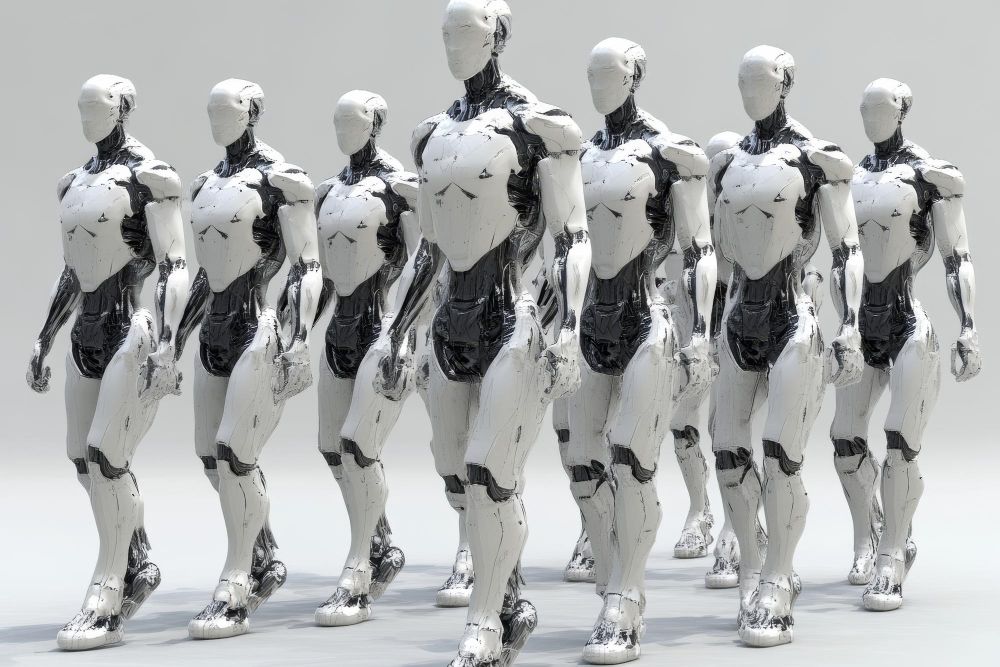
Humanoid robots are moving from experimentation to industrial reality — and fast.
A new study from Roland Berger suggests the sector could evolve into a market worth between $300 billion and $750 billion by 2035, with long-term potential reaching $4 trillion, placing it on par with today’s global automotive industry.
According to the report “Humanoid Robots 2026 – The Convergence Moment for a New Market”, the tipping point is already forming — driven by a powerful convergence of artificial intelligence, hardware advancements, and structural labor shortages.
With estimated operating costs of around $2 per hour, humanoid robots are emerging as a scalable solution to workforce gaps — particularly in developed economies facing aging populations and declining labor availability.
“At this stage, technological feasibility is aligning with economic necessity,” says Thomas Kirschstein, Partner at Roland Berger. “The key question is no longer whether humanoid robots are viable — but how quickly they can scale.”
This creates a new industrial ecosystem which opens growth opportunities for both technology companies and traditional industrial players.
However, the transition is not frictionless. While hardware capabilities are advancing rapidly, software maturity still lags by three to five years, reflecting the complexity of deploying AI-driven systems in real-world industrial environments.
Challenges remain across: system integration, supply chains and regulatory frameworks - which could slow large-scale deployment — but are unlikely to stop momentum.
Europe, despite its strong technological base, lacks speed and coordinated investment. “Europe has the capabilities to benefit from humanoid robotics,” says Pol Busquets, Partner at Roland Berger.
“What’s missing is the determination to invest in its own value chains and scale rapidly.”
For businesses, this signals a shift from labor-driven operations to automation-first and AI-powered systems.
For governments and regions, the stakes are even higher. Capturing value in this market will depend on how well governments can stimulate building domestic industrial capacity, securing core supply chains and accelerating innovation ecosystems and large investment opportunities.
The window is open - but it may not stay open for long.
A new study from Roland Berger suggests the sector could evolve into a market worth between $300 billion and $750 billion by 2035, with long-term potential reaching $4 trillion, placing it on par with today’s global automotive industry.

The convergence moment for humanoid robotics
The economics are becoming increasingly compelling.With estimated operating costs of around $2 per hour, humanoid robots are emerging as a scalable solution to workforce gaps — particularly in developed economies facing aging populations and declining labor availability.
“At this stage, technological feasibility is aligning with economic necessity,” says Thomas Kirschstein, Partner at Roland Berger. “The key question is no longer whether humanoid robots are viable — but how quickly they can scale.”
From machines to ecosystems
The opportunity goes far beyond robot manufacturing - the report highlights a multi-layered value chain, spanning:- advanced components and sensors
- electronics and energy systems
- AI software and control systems
This creates a new industrial ecosystem which opens growth opportunities for both technology companies and traditional industrial players.
However, the transition is not frictionless. While hardware capabilities are advancing rapidly, software maturity still lags by three to five years, reflecting the complexity of deploying AI-driven systems in real-world industrial environments.
Challenges remain across: system integration, supply chains and regulatory frameworks - which could slow large-scale deployment — but are unlikely to stop momentum.
Europe’s strategic risk
The report also delivers a clear warning: Europe risks missing the next industrial wave. The global race is already taking shape - The United States leads in AI development and China dominates industrial scale and manufacturing.Europe, despite its strong technological base, lacks speed and coordinated investment. “Europe has the capabilities to benefit from humanoid robotics,” says Pol Busquets, Partner at Roland Berger.
“What’s missing is the determination to invest in its own value chains and scale rapidly.”
The next global industrial platform
Humanoid robotics is not just another emerging technology — it is shaping up to become a foundational layer of the future economy.For businesses, this signals a shift from labor-driven operations to automation-first and AI-powered systems.
For governments and regions, the stakes are even higher. Capturing value in this market will depend on how well governments can stimulate building domestic industrial capacity, securing core supply chains and accelerating innovation ecosystems and large investment opportunities.
The window is open - but it may not stay open for long.


 I don’t know the key to success, but the key to failure is trying to please everybody.
Bill Cosby
American Comedian
American Comedian